Personal Access Tokens & basic auth are being retired across Azure DevOps, Jira, ServiceNow & more. Switch to OAuth 2.0 — fully supported in ADL Connect.
Why ADL Connect Is the Best Jira Connector on the Market
Posted on
Updated on September 17, 2026
Author : ADL Solution
Salesforce & Jira · Bridging Two Worlds
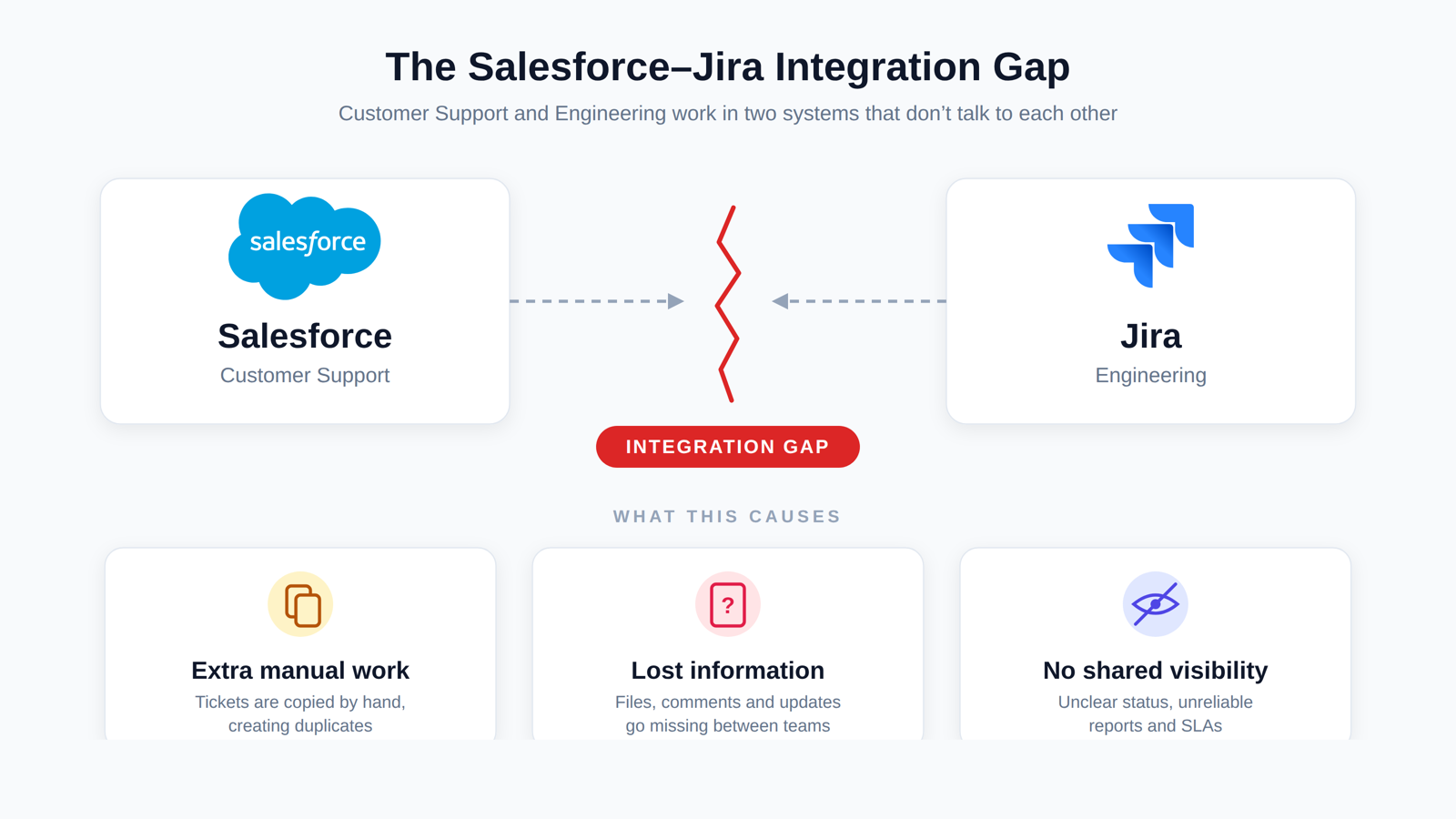
Your support team lives in one platform. Your engineers live in another. Between those two worlds sits a quiet, expensive gap — and most teams don’t realise how much it costs them until they measure it.
Picture a typical day. A customer reports that a feature is broken. A support agent captures every detail in the CRM, reassures the customer, and then… walks that same information over to the engineering team by hand — a chat message here, a copied paragraph there, a screenshot pasted into a ticket. Jira becomes the engineers’ home for that work, but the two records now live separate lives.
From that moment on, nobody has the full picture. The agent doesn’t know when the fix ships. The engineer doesn’t see the customer’s follow-up. Multiply that across hundreds of issues a month and you get the real tax of disconnected tools: wasted hours, frustrated customers, and decisions made on stale information.
Problem one
Rekeying the Same Work, Twice
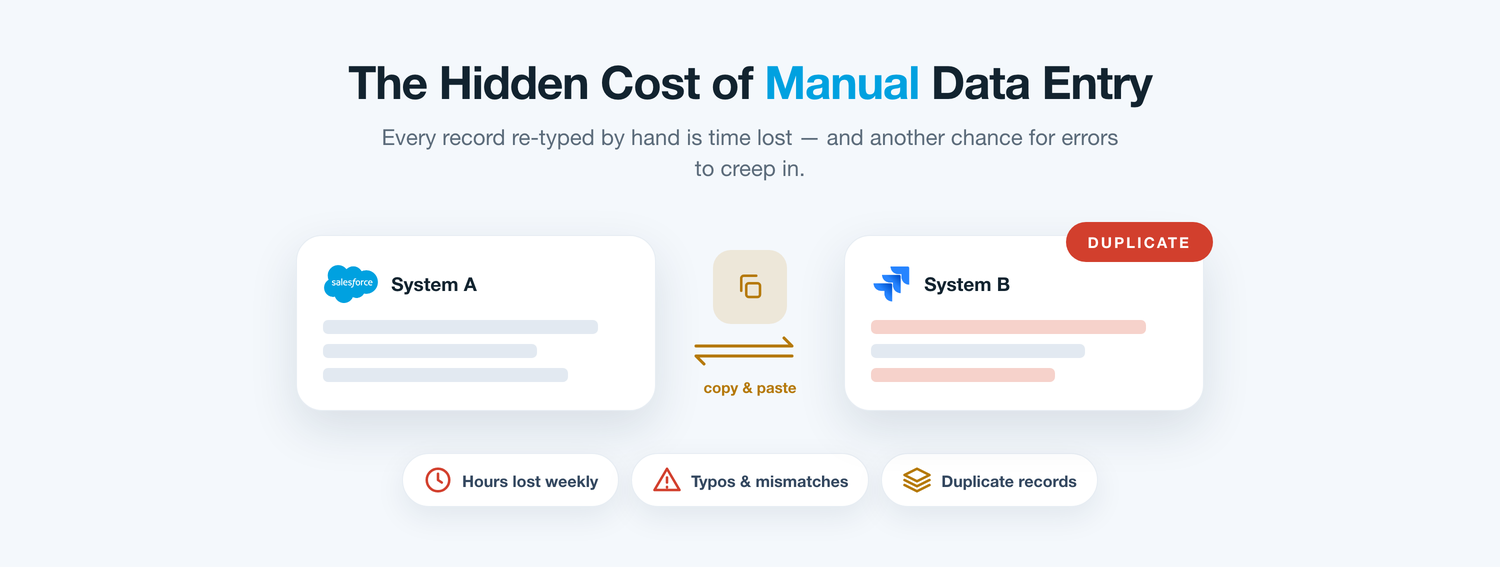
The most visible symptom is duplicate data entry. Every escalation is typed into the CRM, then typed again into Jira. It feels like busywork because it is — and busywork breeds mistakes. A priority gets mislabelled, an account name is misspelled, a due date slips a digit.
None of these errors are dramatic on their own. Together, they quietly corrupt the data both teams rely on, until reports stop matching reality and people stop trusting the numbers.
The daily friction
What a Disconnected Setup Really Costs
Individually these feel like minor annoyances. Added up over a quarter, they reshape how fast your teams can actually move.
Slow hand-offs
Issues wait in an inbox instead of moving straight into the engineering queue.
Lost detail
Attachments, logs, and comments get stranded in whichever tool they started in.
Blind support
Agents can’t answer ‘when will this be fixed?’ without pinging a developer.
Duplicate tickets
The same bug is logged twice, splitting the conversation in half.
Shaky reporting
SLA and backlog numbers drift because the two systems never agree.
Problem two
The Visibility Black Hole
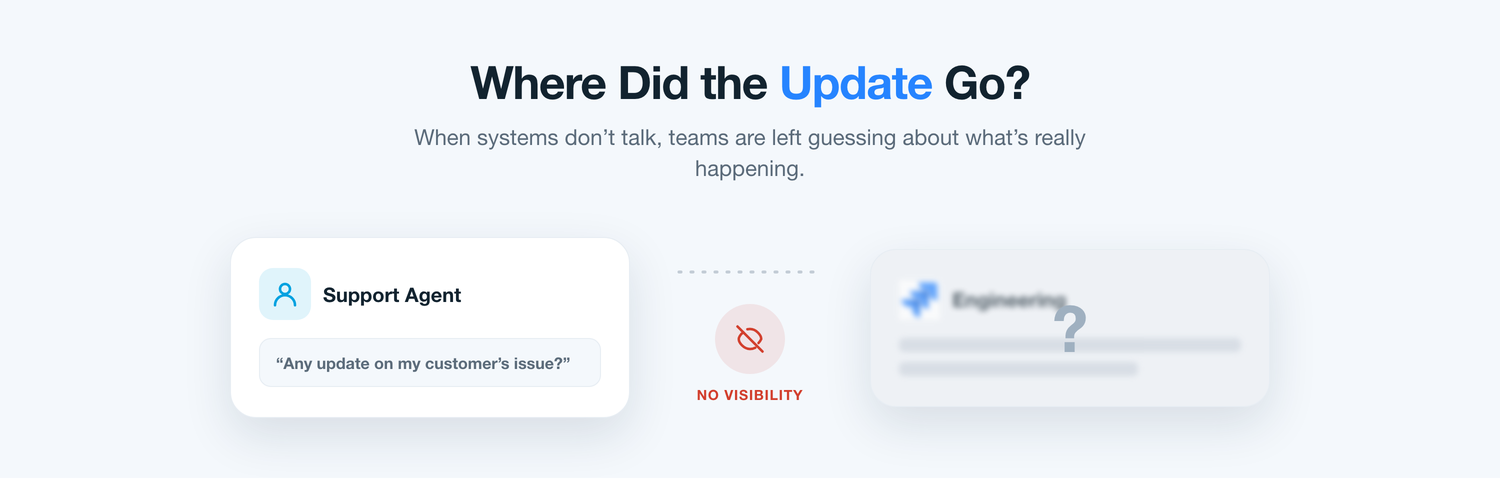
Ask a support lead what happens to an escalated issue after it leaves their team, and you’ll often get a shrug. Once a request crosses into engineering, it disappears from view. Status lives in Jira, but the people talking to the customer can’t see it.
So they do what humans do: they interrupt. A ‘quick’ message to a developer, a status meeting, a spreadsheet someone updates on Fridays. Every workaround is a tax on focus — for both teams — and the customer still waits.
Weighing your options
Three Ways Teams Try to Close the Gap
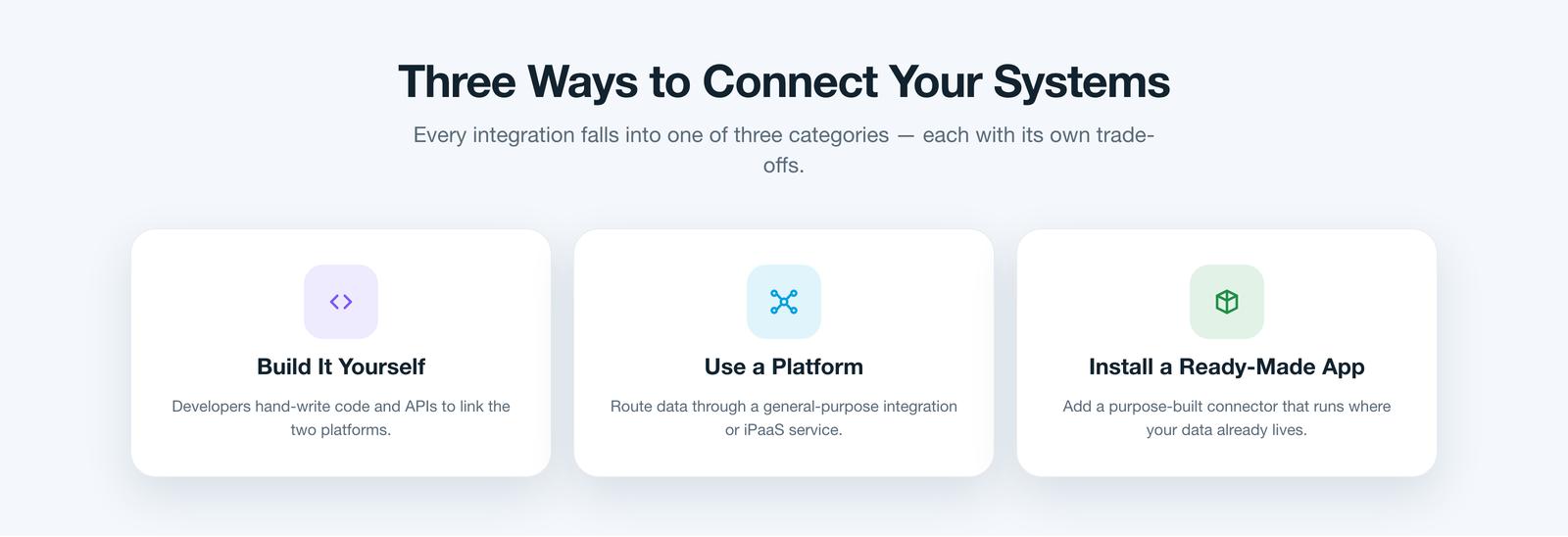
When leaders finally decide to connect the two platforms, they usually land on one of three broad choices. The first is to build it in-house: hand the problem to developers who wire the APIs together with custom code. It is fully bespoke, but it becomes a permanent maintenance commitment that competes with roadmap work.
The second is to route everything through a general integration platform — a middleware layer that sits between your systems. It is flexible, but it adds another product to license, secure, and administer, and your customer data now travels through a third party.
The third is to install a purpose-built application that already understands both platforms and runs where your data lives. Done well, this category avoids the maintenance of custom code and the overhead of middleware — which is exactly where the right tool changes the conversation.
A better fit
Meet ADL Connect
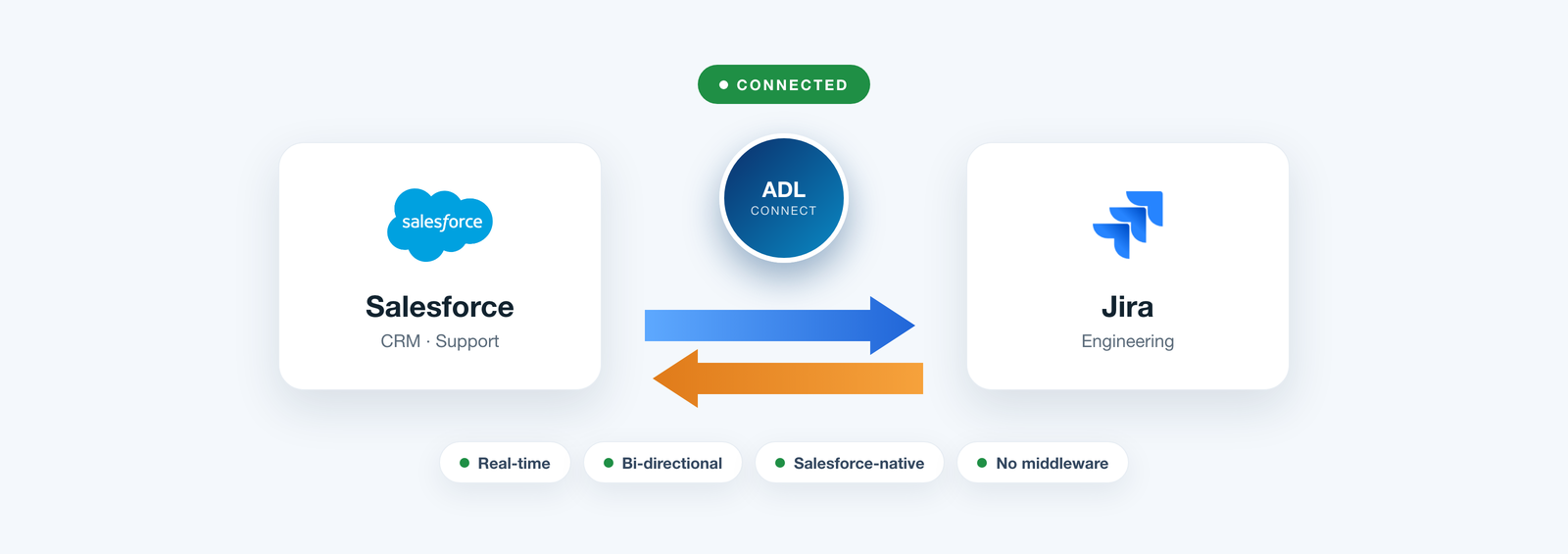
This is where ADL Connect comes in. It belongs to that third category — a purpose-built, Salesforce-native application — but it is engineered specifically to remove the compromises the other two approaches leave behind.
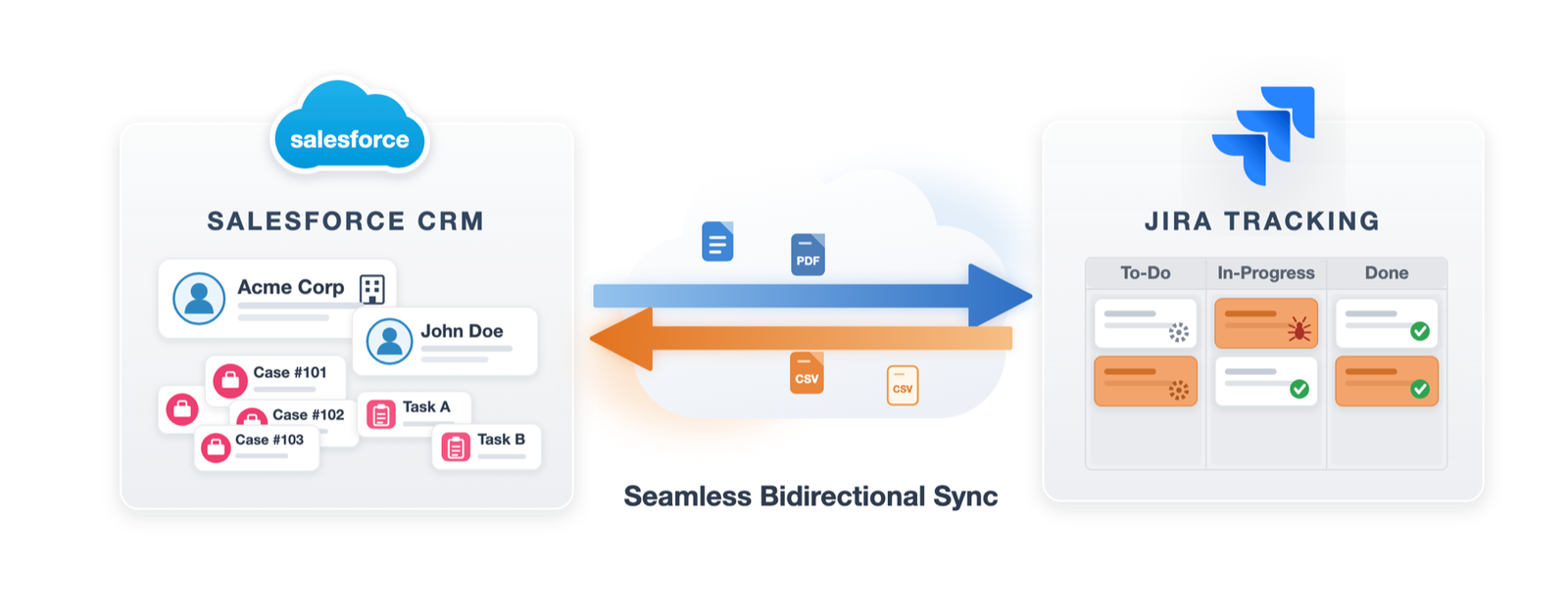
Because it installs directly inside Salesforce from the AppExchange, there is no middleware to stand up and no custom codebase to babysit. It links each Salesforce record to a Jira issue and keeps them in step automatically, so the two worlds finally behave like one.
How it stacks up
ADL Connect vs the Alternatives
The same job, judged across the criteria that decide whether an integration survives its first year in production.
What matters
In-house build
Middleware platform
ADL Connect Best fit
Time to launch
DrawbackWeeks of development before anything works.
Trade-offLengthy setup and connection mapping.
SeamlessManaged-package install — live in minutes.
Upkeep
DrawbackYour team owns every API change forever.
Trade-offA dedicated admin keeps flows running.
SeamlessMaintained for you, tracking each release.
Where data lives
DrawbackScattered across custom scripts.
Trade-offPasses through a third-party server.
SeamlessStays inside your Salesforce org.
Sync depth
DrawbackWhatever you find time to build.
Trade-offOften fields only, on a schedule.
SeamlessFields, status, comments & files, both ways.
Total cost
DrawbackHidden engineering salary line.
Trade-offLicences that grow with volume.
SeamlessFlat pricing with a free tier.
The payoff
Jira, Right Where Your Team Works
Once the connection is live, the Jira picture appears directly on the Salesforce record. Agents stop chasing developers, and developers stop fielding status pings — the answer is simply on screen.
Search and link existing Jira issues without leaving a case
See live status and progress on the Salesforce record
Read and post Jira comments straight from Salesforce
Open attachments and previews on either side
No Jira licences needed for business users
Why it wins
Built for How Enterprises Actually Run
Beyond the day-to-day convenience, ADL Connect is designed to satisfy the people who sign off on it.
Rule-based control
Admins decide what syncs, in which direction, with no code.
Security-first
Named Credentials, respected field-level security, clear audit trails.
Fits any workflow
Map cases, opportunities, or custom objects to Jira issue types.
Lower cost of ownership
Configuration replaces custom development and middleware fees.
Customer feedback
What Teams Tell Us After Switching
A few words from the support and engineering leaders who connected the two platforms with ADL Connect.
★★★★★
“Our agents used to Slack an engineer for every status check. Now the Jira update is right on the case — that alone gave the support team hours back each week.”
PN
Priya N.Head of Support, B2B SaaS
★★★★★
“We evaluated a middleware tool first. ADL Connect was live before we’d even finished the security review for the other option, and nothing leaves our Salesforce org.”
MD
Marcus D.Salesforce Architect, FinTech
★★★★★
“The two-way comment sync is the feature engineers didn’t know they wanted. Context finally flows both ways without anyone copying and pasting.”
ER
Elena R.Engineering Manager, HealthTech
Pricing
Simple, Predictable Plans
Start free and prove the value, then scale on a flat rate instead of paying more every time ticket volume spikes.
Plan
Price
Key inclusions
StartupFree forever
$0
Up to 5 users, 1,000 monthly callouts, native AppExchange package, and business-hours email support — ideal for a first project.
EnterpriseMost popular
$49 / month
Unlimited users and callouts, 24×7 priority support with a rapid response window, and a dedicated success manager.
FAQ
Questions Buyers Usually Ask
Do we need to write any code?
No. ADL Connect installs as a managed package and is configured through a point-and-click interface, so admins set up mappings and rules without development work.
Which versions of Jira are supported?
Jira Cloud, Data Center, and Server, using secure authentication and controlled inbound access through Salesforce Sites.
Will our customer data leave Salesforce?
No. Unlike a middleware approach, the connector runs inside your Salesforce org, so records stay within your security boundary.
How long does setup take?
Most teams are live in well under an hour: install the package, authorise the connection, and map the objects and fields you care about.
Can we try it before committing?
Yes. The free Startup plan lets you connect a real project for up to five users before you decide to scale up.
Stop Managing the Gap. Close It.
The best Jira connector isn’t the one that moves the most data — it’s the one that makes the gap between support and engineering disappear without adding cost or risk. Native architecture, genuine two-way sync, and rule-based control are what turn two disconnected tools into a single, trustworthy workflow.
If your teams are still relaying updates by hand, that gap is costing you today. ADL Connect is the fastest, lowest-risk way to close it.